Alcinous
Alcinous, son of Nausithous and king of the Phaeacians, is the pivotal mortal figure who enables Odysseus's return to Ithaca after nearly twenty years of wandering. Ruling from Scheria, a land blessed by the gods with unparalleled ships and a life of ease, Alcinous embodies the ideal of generous hospitality (xenia) that the poem holds up as a standard. His decision to hear Odysseus's full story, to load him with magnificent gifts, and to provide a magical ship that transports the sleeping hero home, makes him the indispensable bridge between Odysseus's fantastic adventures and his final, brutal reckoning in Ithaca.
Identity and Background
Alcinous is the son of Nausithous, the founder of the Phaeacian city on Scheria, who moved his people from Hypereia to escape the lawless Cyclopes. He is the husband of Queen Arete, whom he honors above all other women, and the father of five sons—Laodamas, Halios, and Clytoneus among them—and a daughter, Nausicaa. The Phaeacians are a seafaring people, dear to the gods, who live apart from other nations and pride themselves on their swift, self-navigating ships, their dancing, and their luxurious way of life. Alcinous rules with wisdom and is described as one whose counsels are inspired by heaven.
Role as Host and Protector
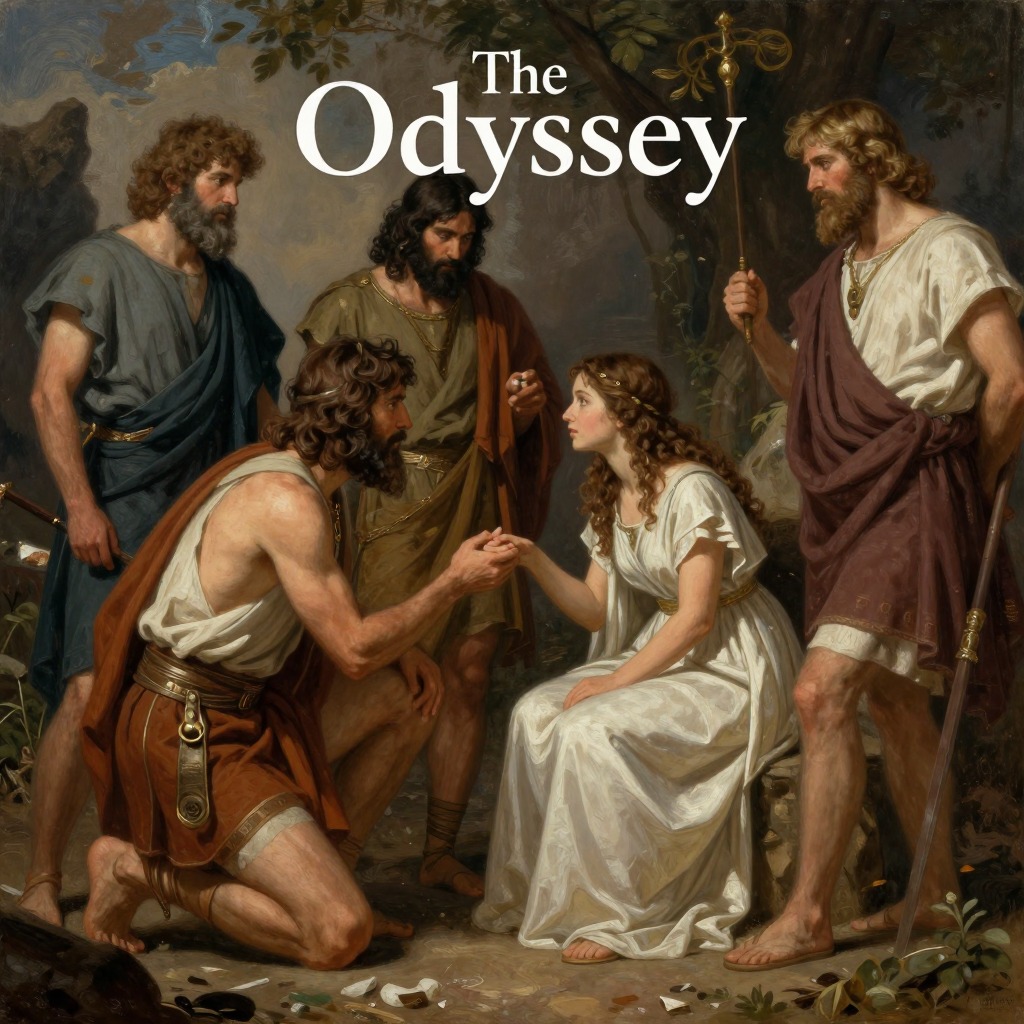
Alcinous's first encounter with Odysseus sets the tone for his entire role. When Odysseus, still filthy and shipwrecked, appears in his palace and supplicates Queen Arete, it is the old counselor Echeneus who reminds Alcinous of his duty: it is not creditable that a stranger should sit in the ashes. Alcinous immediately raises Odysseus, seats him beside his own son Laodamas, and orders a feast. He declares that the stranger must be escorted home, no matter how distant his country, and that the Phaeacians will provide a ship and crew. When Odysseus weeps at the songs of Demodocus, Alcinous alone notices and tactfully stops the bard, then presses his guest to reveal his identity and his story. He offers Odysseus his daughter Nausicaa's hand in marriage, promising a house and estate if he will stay, but immediately adds that no one shall keep him against his will.
Generosity and the Provision of the Escort
Alcinous's generosity is the engine of Odysseus's return. After hearing Odysseus's entire tale of the Cyclops, Circe, the Underworld, and the loss of his men, Alcinous organizes a second round of gifts, calling on the twelve chief men of the Phaeacians to each contribute a cloak, a shirt, and a talent of gold. He himself promises a golden goblet. The king personally oversees the stowing of the treasure in the ship and, after a final sacrifice to Zeus, sends Odysseus on his way. The Phaeacian ship, with its supernatural speed, carries the sleeping Odysseus to Ithaca in a single night, fulfilling Alcinous's promise.
Consequences and the Wrath of Poseidon
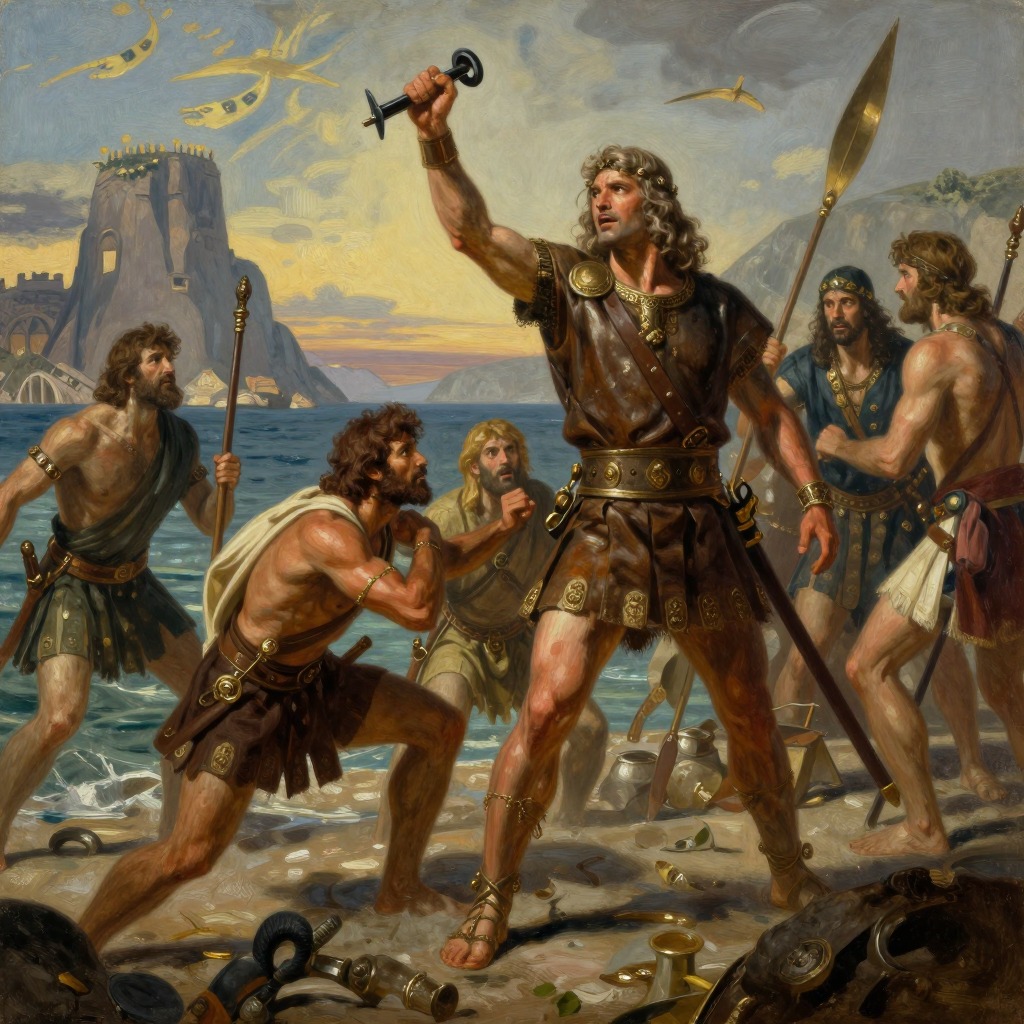
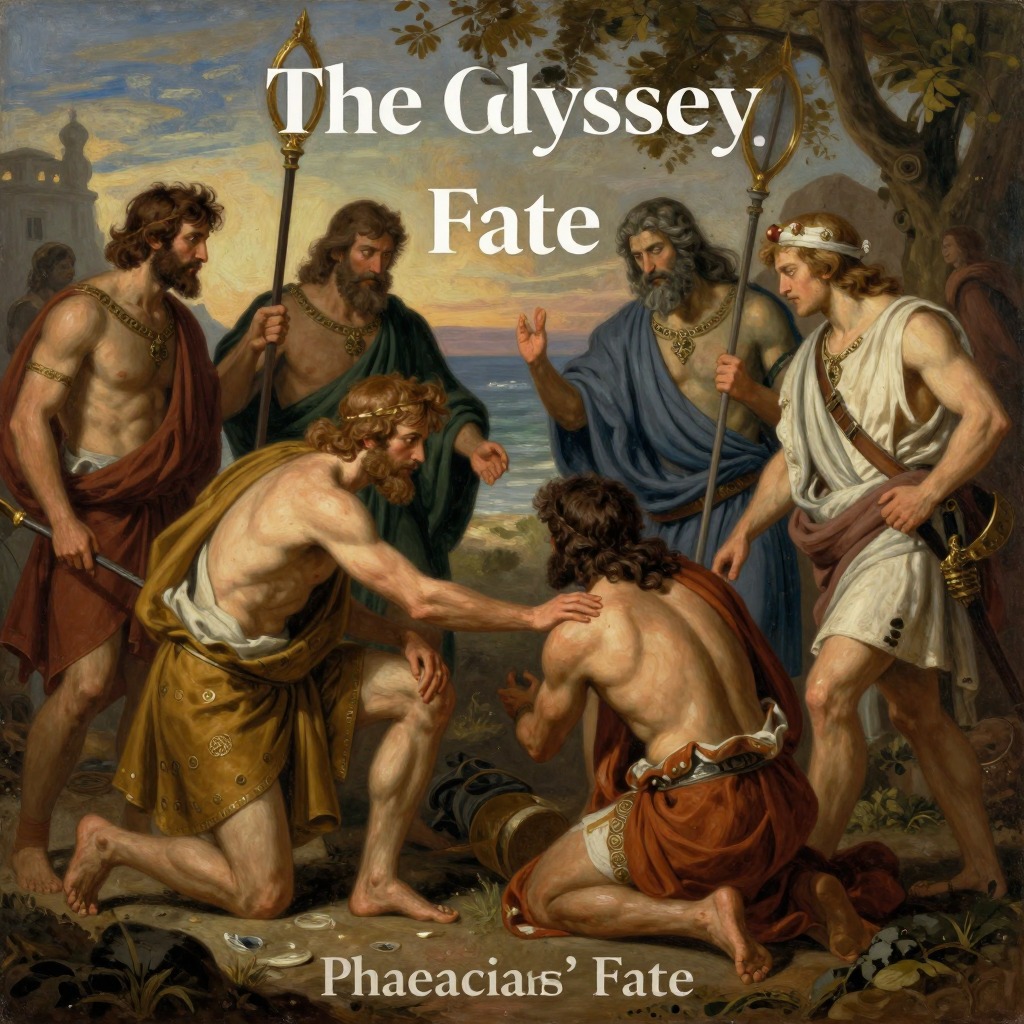
Alcinous's hospitality comes at a cost. Poseidon, furious that the Phaeacians have rescued the man who blinded his son Polyphemus, complains to Zeus and is given permission to punish them. As the returning ship approaches Scheria, Poseidon turns it to stone and roots it in the sea. Alcinous, recalling his father Nausithous's prophecy that this would happen, immediately orders the people to cease giving escorts to strangers and to sacrifice twelve bulls to Poseidon to avert the threatened burial of their city under a mountain. This moment marks the end of the Phaeacians' role as divine ferrymen and closes the door on the world of magical hospitality that had sheltered Odysseus.
Narrative Significance
Alcinous functions as the ideal host against whom all other hosts in the poem—the Cyclops Polyphemus, the Laestrygonian Antiphates, even the suitors in Ithaca—are measured. His court provides the setting for Odysseus's great apologue (Books 9–12), the hero's own narration of his adventures, which is the heart of the epic. By listening and responding with unstinting generosity, Alcinous enables the poem's central narrative act: Odysseus's self-revelation. His kingdom, Scheria, is a liminal space between the world of myth and the world of Ithaca, and Alcinous himself is the last and most generous of the hosts who help the hero on his way home.